
Toronto Homowo 2025 Celebrations Unite Community in Culture and Glee
In a vibrant display of culture and unity, Toronto’s Ga-Dangme community celebrated Homowo 2025 with two joyful events that drew one of the largest turnouts in recent memory. Ga-Dangme family and friends traveled from far and wide, including some who hadn’t attended in decades, to reconnect with their heritage and community. The festivities organized by the Ga-Dangme Association of Toronto (GADAT) comprised a sunny picnic, Homowo at The Park, and a lively Homowo Dinner & Dance gala, both filled with music, food, and heartfelt reunion.
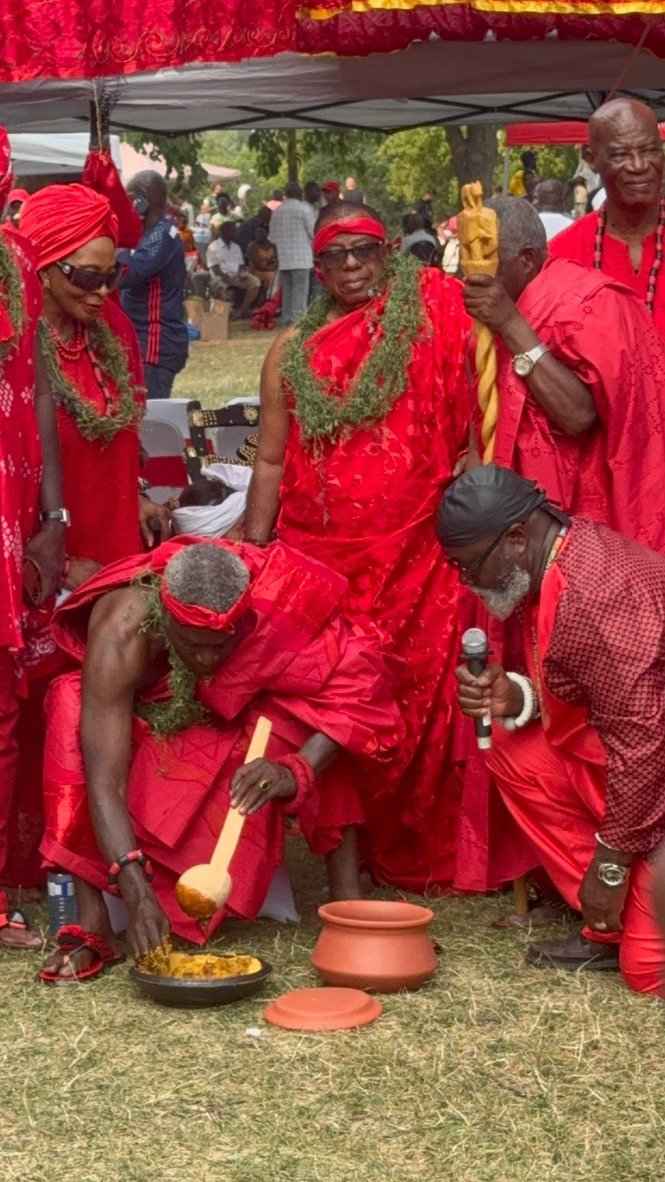
The Homowo festivities kicked off on August 3 with “Homowo @ The Park,” a day-long cookout at Paul Coffey Park in Malton, Mississauga. Hundreds of attendees, dressed in bright red outfits and new “Homowo Festival” t-shirts, filled the park like a sea of customary colours and confidence. It is tradition to wear red for Homowo, and the vibrant attire set a festive mood as families fired up grills for barbecue and shared homemade dishes. The air was filled with the familiar aromas of Ghanaian delicacies, while the drum rhythms, music, and laughter echoed throughout the park. In keeping with custom, Nii Kwei Arku V, the Ga Mantse of Toronto, led the community in the sacred kpokpoi rites, sprinkling the ceremonial Homowo cornmeal dish as a blessing. The open-air celebration felt like a family reunion, with many elders marveling at the sight of old friends and younger generations getting familiar with the ever-expanding community while observing and honouring the ways of their ancestors.
Two weeks later, on August 16, the Homowo Dinner & Dance gala capped off the festivities in grand style. Held at Toronto’s Woodbine Banquet Hall, the evening was made possible by the dedication of the GADAT Next Generation team, a group of enthusiastic younger members with strong support from the GADAT leadership. The banquet hall was filled with elegantly dressed guests from diverse backgrounds, not just Ga-Dangme people. Many other Ghanaians and African diasporan friends joined in, reflecting the inclusive spirit of the event. Attendees were treated to a rich program including a welcome address and prayers, a dinner of Ghanaian and Continental dishes, cultural performances, and inspiring speeches from Christiana Nuamah (GADAT President), Nii Sackey Sackeyfio (GADAT Next Gen President), and other community leaders. Raffle prizes kept the excitement high, but the real highlight was the energetic dance floor. The DJ combined traditional beats with highlife and afrobeats, keeping everyone from teenagers to grandparents up on their feet. Laughter and cheers flooded the hall as generations mingled, celebrating not just a festival but the resilience of their community. The Homowo Dinner & Dance brought Ga-Dangme culture to life in a modern setting, showcasing that tradition can evolve and thrive beyond the homeland.
Homowo (a Ga word meaning “hooting at hunger”) is a centuries-old harvest festival of the Ga people of Ghana’s Greater Accra region. The festival originated after a historic famine; when a bountiful harvest finally arrived, the Ga people triumphantly “hooted” at the memory of hunger. Homowo celebrations traditionally begin with the planting of maize and reach a climax after the harvest when the maize is prepared with palm oil into a dish called kpokpoi and eaten with palm nut soup. During the lead-up to Homowo, drumming and noise-making are banned in Greater Accra, a period of quiet meant to honor the gods and the impending harvest. On the festival day, communities rejoice with music and dance. Chiefs and family heads sprinkle the kpokpoi around town, from residence to residence, as a blessing and sign of gratitude and abundance. Processions move through the streets, drumming, chanting, and performing traditional dances, livening every corner.
In Toronto’s diaspora celebration, many of these customs are proudly preserved, although in an adapted form. The community still prepares and shares kpokpoi at Homowo events, and a ceremonial sprinkling and pouring of libations, though done at a park or banquet hall, still maintains the link to Ga rituals. Drumming, dancing, and singing remain central, even if the “streets” are park lawns or dance floors. Perhaps most importantly, Homowo in Toronto has become a time for unity and the preserving and passing down of traditions for the youth and community to experience firsthand. Such gatherings serve as a reminder of one’s roots and directly connect the next generations in the diaspora to them. The enthusiastic involvement of GADAT’s Next Generation team this year exemplified how young Ga-Dangme Canadians are carrying the torch, ensuring that the Homowo festival continues to flourish far from its origin. “Hooting at hunger,” the spirit of Homowo, was clearly alive in Toronto this year, from the tables at the park loaded with food to the joyful dances at the dinner gala. Both events truly expressed the spirit of Homowo, blending cultural appreciation with festive fun. The Ga-Dangme Association’s leadership expressed gratitude to everyone who attended and helped make Homowo 2025 such a success, and extended an open invitation to all: come experience Homowo with us next year. Whether you are Ga-Dangme or just curious, you’re welcome to join this warm community in “hooting at hunger” again in 2026, a cultural celebration that promises to be just as heartfelt and vibrant.
No Comments